Top 10 Egyptian symbols, what they mean and where to see them
The ten Egyptian symbols you will see most are the ankh, the Eye of Horus, the scarab, the djed pillar, the was sceptre, the cartouche, the uraeus cobra, the crook and flail, the feather of Maat, and the lotus and papyrus. Most of them stand for a wish: life, health, rebirth, stability or power. Learn them once and every temple wall and museum case gets easier to read. Each entry below says what the symbol means and where to look for it.
How we chose these ten
Egyptian writing used hundreds of picture signs, and almost any of them could carry a meaning. We picked the ten that turn up most, on temple walls, on royal statues and as amulets in museum cases.
Each one had to be easy to spot once you know it, and backed by a museum or university source. Many began as amulets, small charms worn for protection. The Met notes that most were cheap, so nearly everyone could own one.
1. Ankh: the sign of life
The ankh is a cross with a loop at the top. It is the hieroglyph for life. Gods are often shown holding it, and in some scenes they hold it out to the king.
You will see it on almost every temple wall in Egypt. Watch the hands of the gods in the offering scenes. It often appears with the djed and the was, a set that wished the king life, stability and power.
2. Eye of Horus: health and protection
The Eye of Horus, or wedjat eye, is the healed eye of the falcon god. In the myth, Seth hurt or stole it and Thoth restored it. Its Egyptian name means the one that is sound again.
It mixes a human eye with a falcon's markings below. People wore it to protect themselves and to heal. The Met calls it one of the most common amulets of all, for the living and the dead. Museum cases of amulets in Cairo are full of them.
3. Scarab: rebirth with the rising sun
The scarab is a dung beetle. Egyptians watched it roll a ball of dung and saw the sun rolling across the sky. Its hieroglyph means to come into being, so the scarab stood for life and rebirth.
Scarab amulets were often cut with a name underneath and used as seals. In the New Kingdom, a large heart scarab was placed on the mummy to help at the final judgement. At Karnak, a big granite scarab raised by Amenhotep III stands near the sacred lake.
4. Djed pillar: stability
The djed is a column with four bars across the top. From the earliest times it meant permanence and stability. Later it was linked to Osiris and read as his backbone.
It was a favourite funerary amulet, meant to help the dead last forever with Osiris. Look for it in the amulet cases of Egypt's museums, and paired with the ankh in temple scenes.
5. Was sceptre: power
The was is a tall staff with a forked foot. It stood for dominion, the power to rule. Gods hold it in their hands on temple walls.
In carved scenes, the god often holds the was in one hand and the ankh in the other. The Met describes the ankh, djed and was together as a set of wishes passed between king and god.
6. Shen ring and cartouche: the king's name
The shen is a loop of rope tied into a circle. It stood for eternity. Stretch it into an oval and you get a cartouche, the frame that held the king's names.
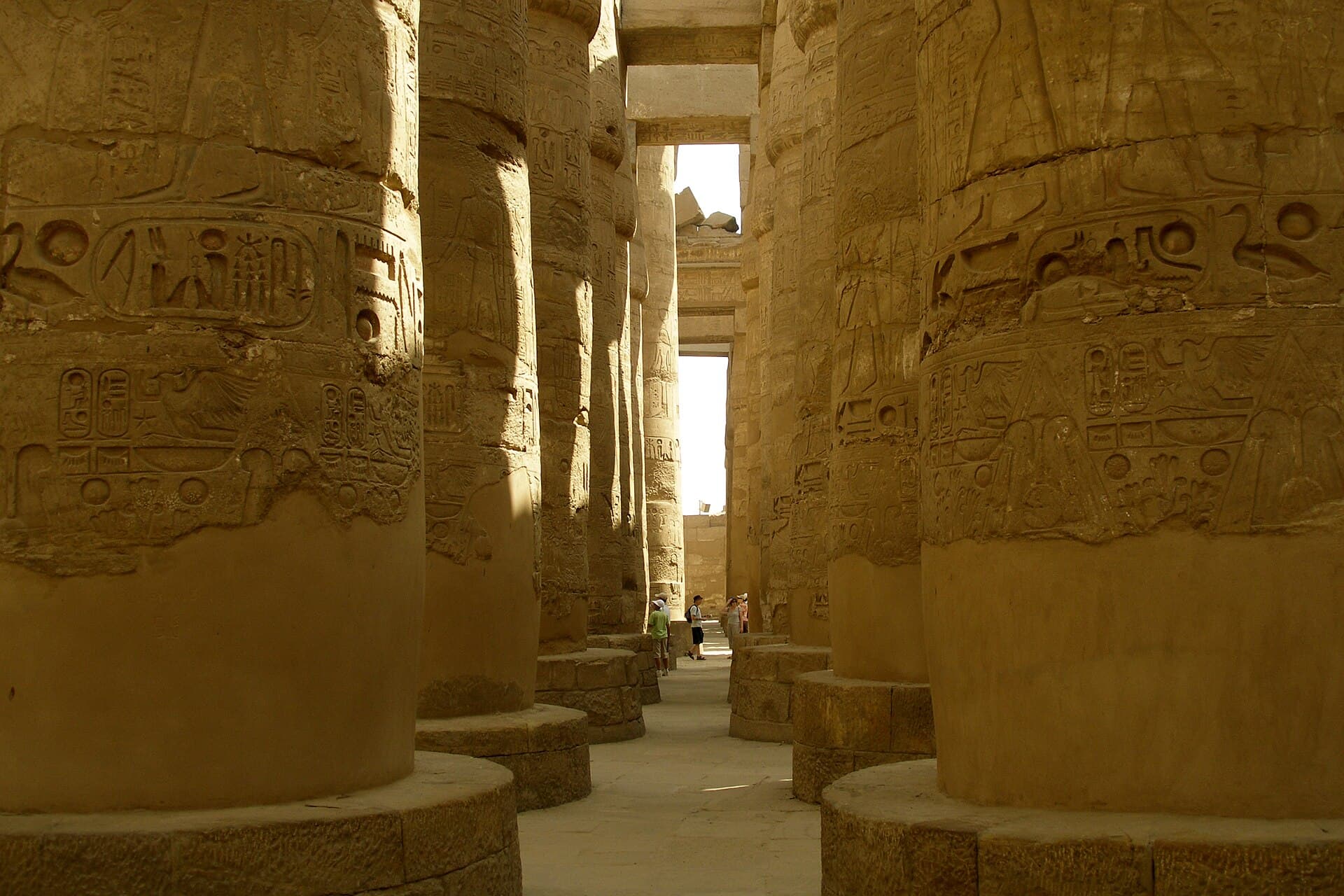
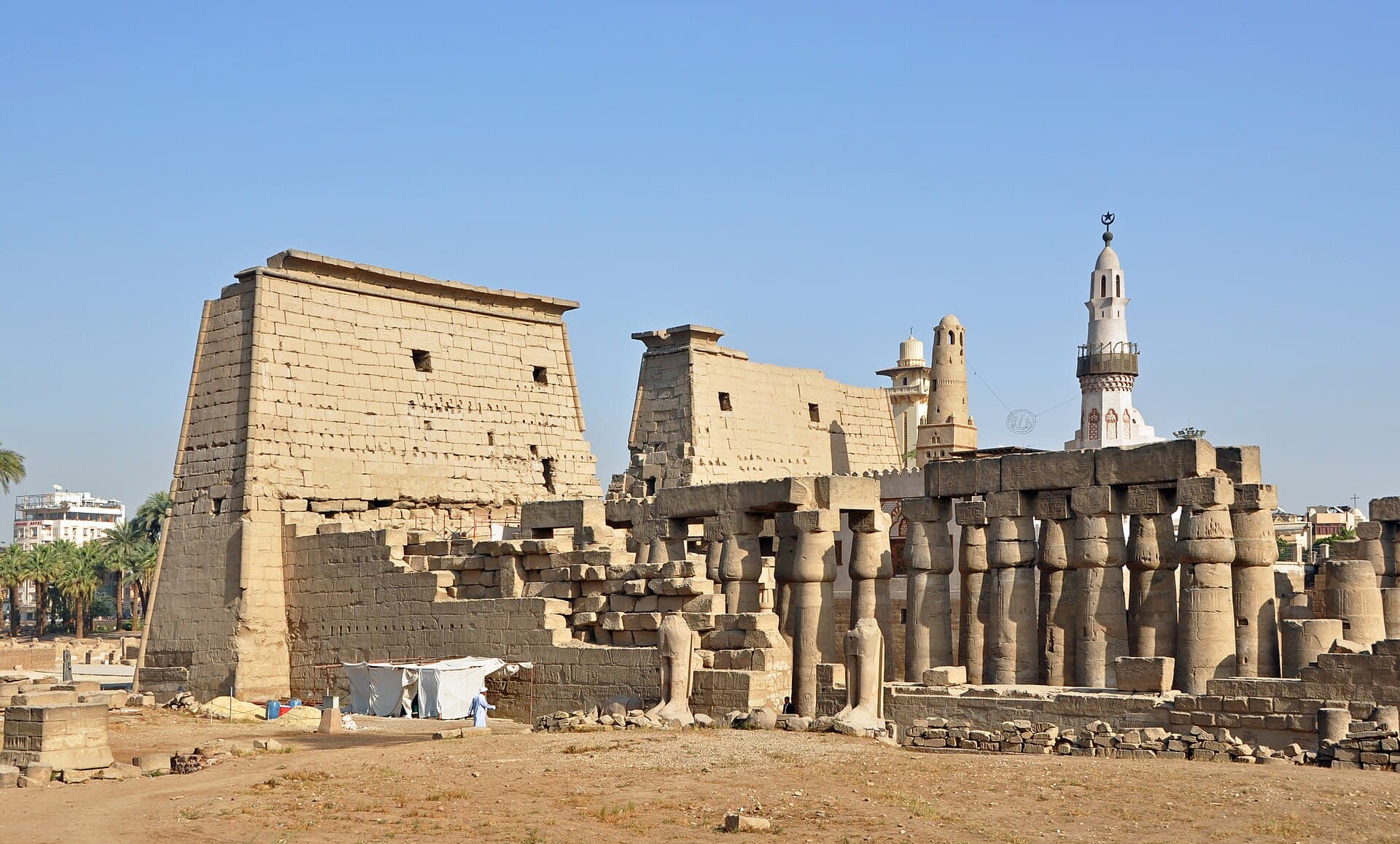
By the Middle Kingdom a king had five names. Two of them, his throne name and birth name, went inside a cartouche. The Abydos King List shows 76 of them in a row. At Luxor Temple, a cartouche cut deep enough to fit a finger is usually Ramesses II's.
You can also buy one. Gold and silver cartouche pendants with your name in hieroglyphs are made to order in the gold alley of Khan el-Khalili. Buy them by weight.
7. Uraeus: the royal cobra
The uraeus is a rearing cobra on the king's forehead. It was the sign of Wadjet, the cobra goddess of Lower Egypt, who protected kings. Egyptians believed it could spit fire at the king's enemies.
Once you know it, you will see it on the brow of nearly every royal statue and mask. Check the forehead of any pharaoh in the Egyptian Museum or the Grand Egyptian Museum.
8. Crook and flail: the right to rule
The crook is a short shepherd's staff. The flail is a rod with three beaded strands. Osiris holds them crossed over his chest, and kings held them too.
Look for them whenever a king is shown wrapped like Osiris. At Abu Simbel, the great hall is lined with Osiride pillars, each one Ramesses II in the form of the god.
9. Feather of Maat: truth and order
Maat was truth, justice and balance, and also the goddess of those ideas. She wears a single ostrich feather on her head.
After death, the heart was weighed against Maat or her feather. A heart heavy with wrongdoing failed the test. In temple scenes, the king often offers the gods a small crouching figure of Maat, a promise to keep order.
10. Lotus and papyrus: the two lands
Egypt was two lands joined into one. The lotus stood for the south, Upper Egypt, and papyrus for the north, the delta of Lower Egypt.
On the sides of the thrones of the Colossi of Memnon, Nile figures tie papyrus and lotus together around a central sign. It is the standard picture of the united country. Temple columns are often shaped like papyrus or lotus stems too.
Common questions
What is the most famous Egyptian symbol?+
The ankh, the looped cross that means life, is the best known. The Eye of Horus comes close. Both were worn as amulets for thousands of years.
What does the Eye of Horus mean?+
Healing and protection. In the myth, Seth damaged the eye of Horus and Thoth restored it. Its Egyptian name, wedjat, means the one that is sound again.
What is the Egyptian symbol for life?+
The ankh. It is the hieroglyph for the word life, and gods are often shown holding it or offering it to the king.
What does a cartouche mean?+
It is an oval frame around a royal name. It grew out of the shen ring, which stood for eternity. A name inside it was meant to last forever.
What does the scarab symbolise?+
Rebirth. The beetle rolling its dung ball reminded Egyptians of the sun rolling across the sky each day, reborn every morning.
Is it okay to wear Egyptian symbols today?+
Yes. Ankh, scarab and cartouche jewellery is sold all over Egypt, and Egyptians sell it to visitors every day. Our page on what to buy in Egypt covers what to look for.
Where can I see these symbols in Egypt?+
Everywhere. The best places are Karnak, Luxor Temple and Abydos for carved walls, and the Egyptian Museum and the Grand Egyptian Museum for amulets and royal statues.
Official sources
Entry rules, opening hours, security advice and exchange rates all move. Check them at the source, not here.
Written and checked by the Nile Trip Guide editorial team · Last reviewed . Entry rules, prices and opening hours change — check anything critical against the official sources linked on this page.
Plan this trip
Tell us your dates and we will price it
A real itinerary with real prices, usually within 24 hours. Nothing is booked and nothing is charged until you say yes.
The route most people take first, at the length it was built for: Giza and the Grand Egyptian Museum, then a flight to Luxor and four nights sailing down to Aswan.
Giza and the Grand Egyptian Museum, then a flight south for one night in Luxor covering both banks, and a flight back. Five days, two cities, both domestic flights in the price and every day guided privately.