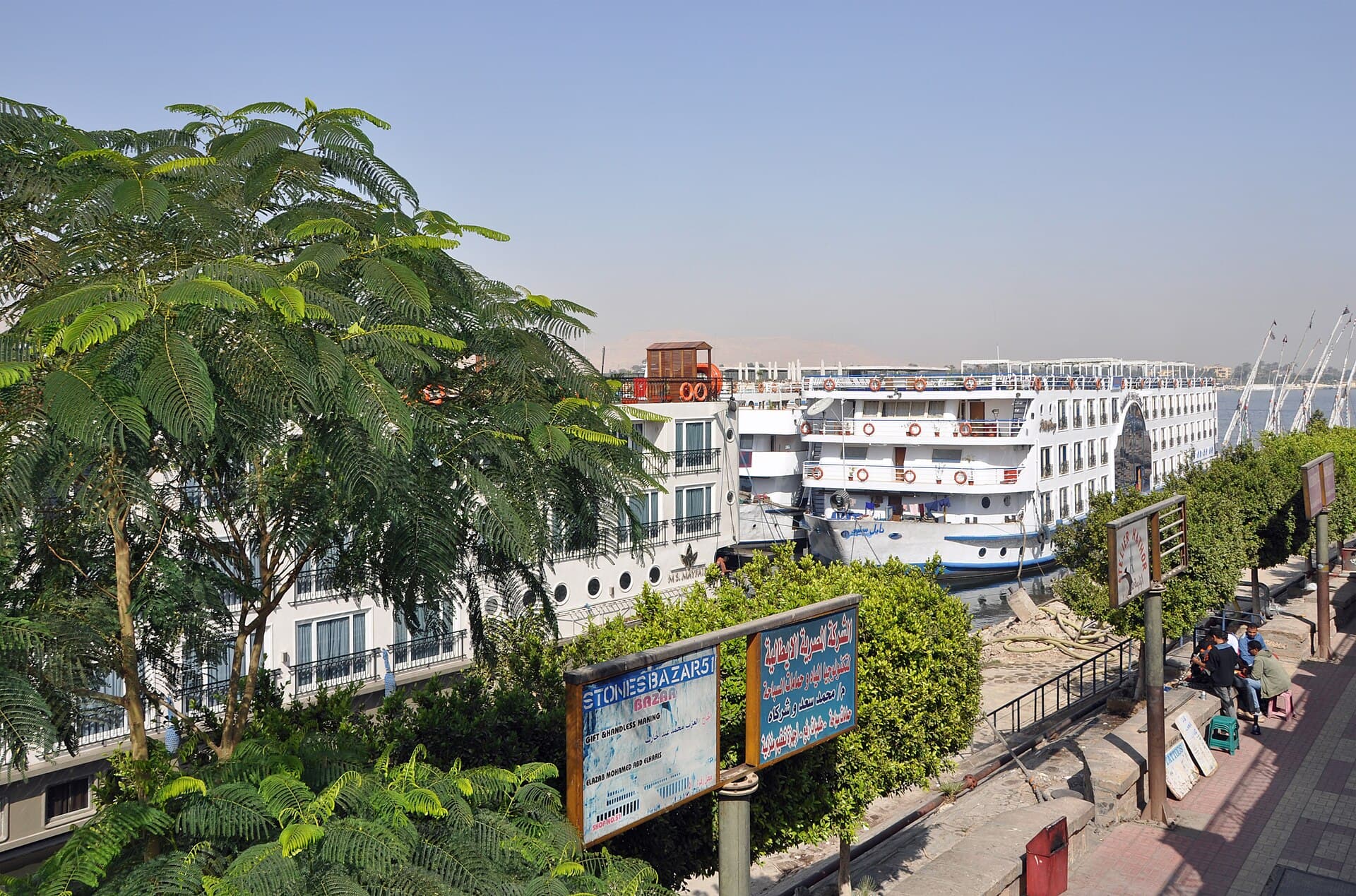
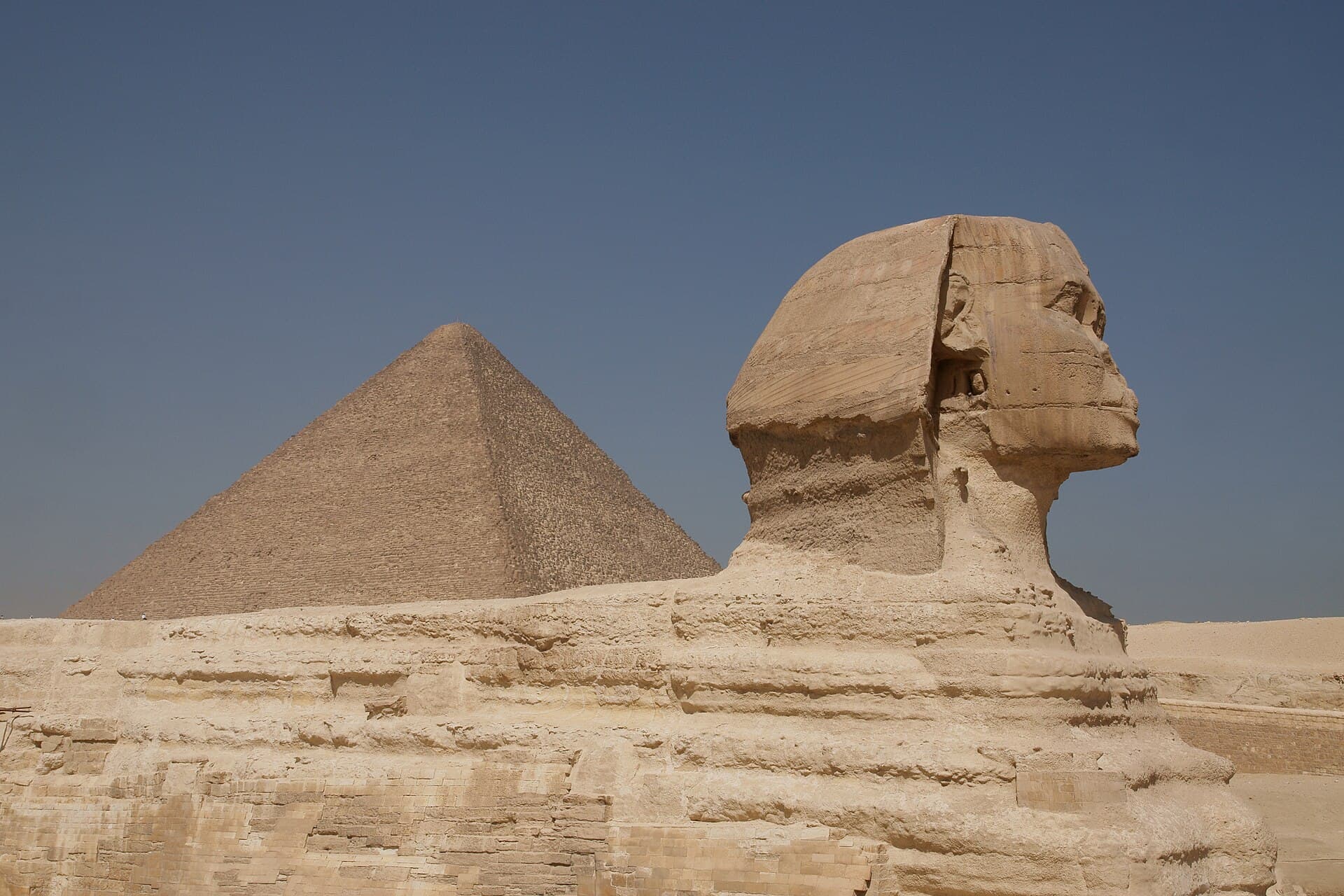
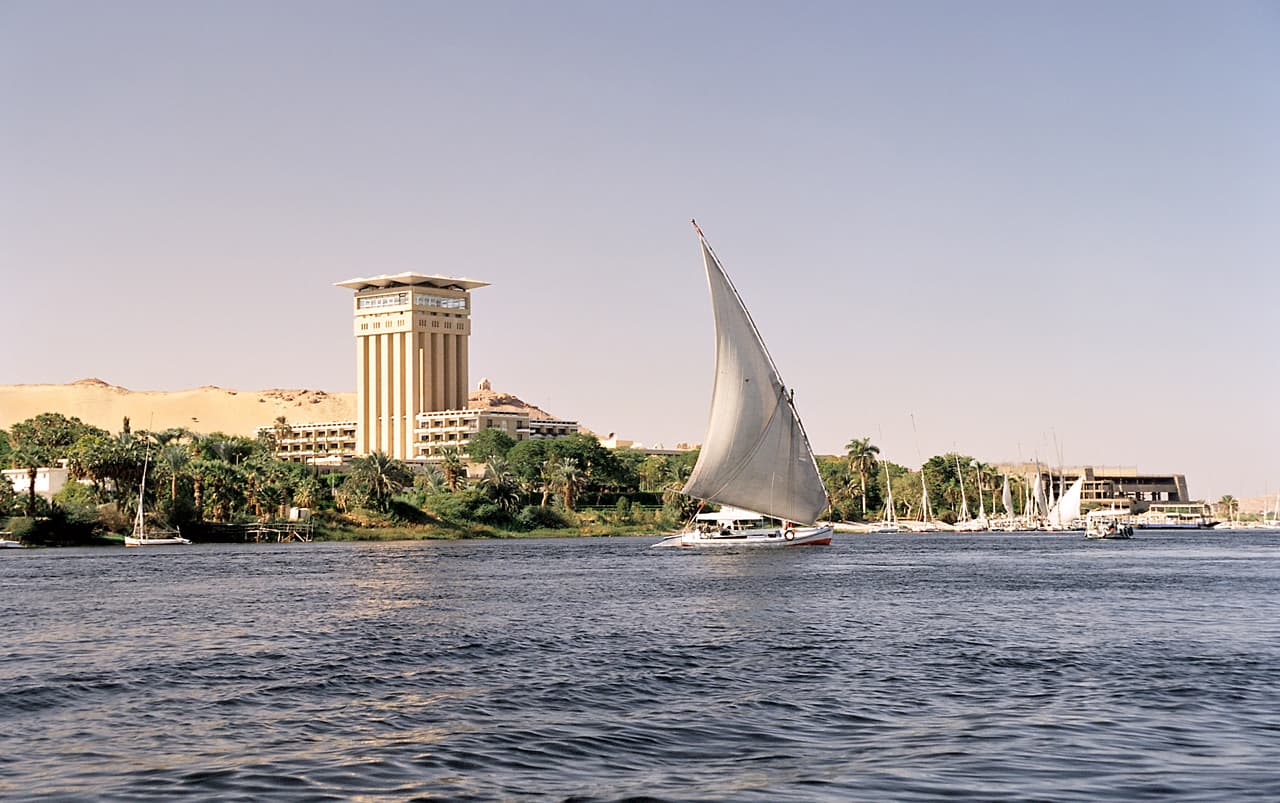
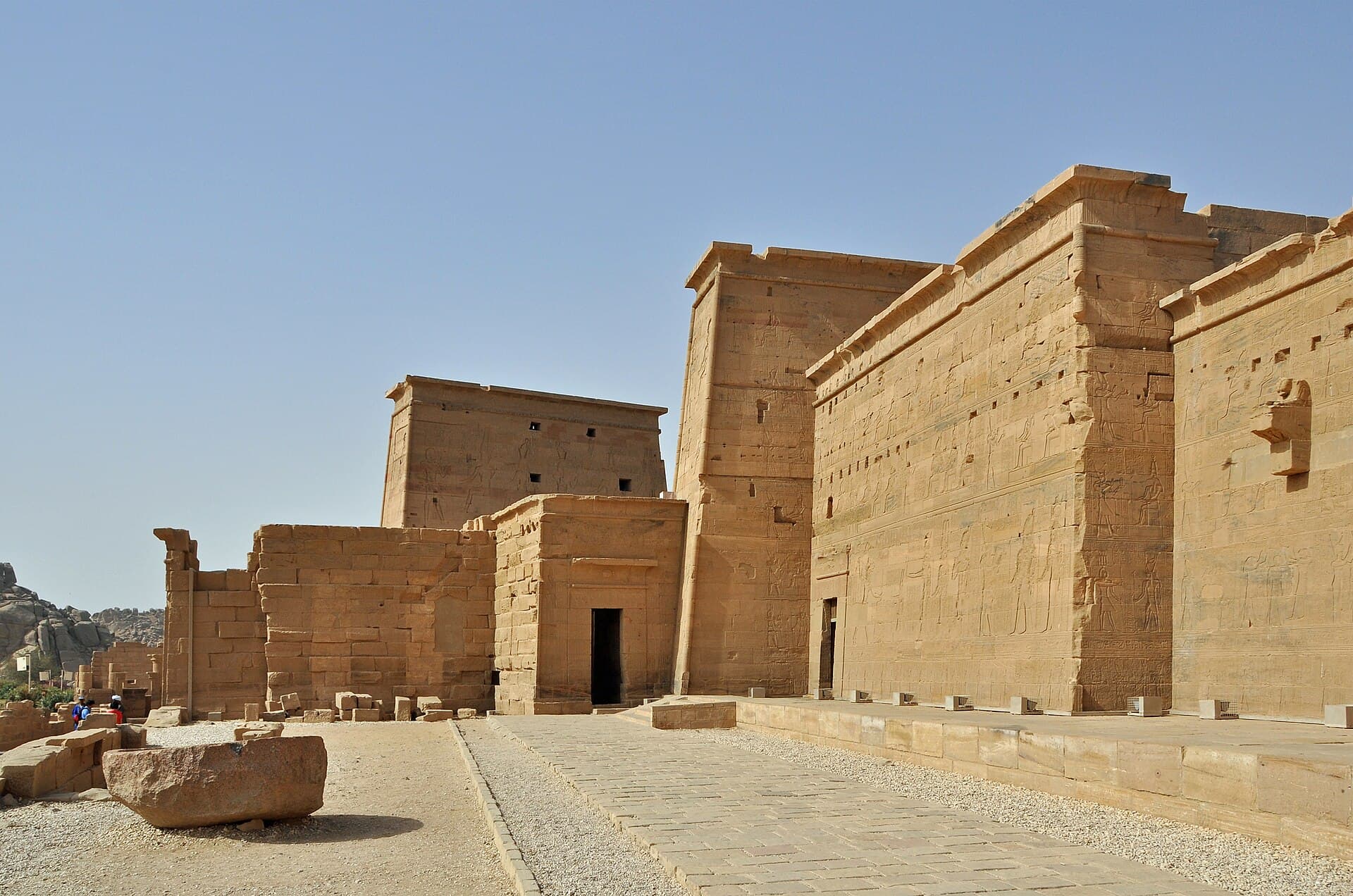
Egypt's ten great landmarks are the Pyramids of Giza, the Great Sphinx, the Step Pyramid at Saqqara, the Grand Egyptian Museum, the Cairo Citadel, Khan el-Khalili, Karnak, the Valley of the Kings, Abu Simbel and Mount Sinai. Six are in or near Cairo. Three are in the south, along the Nile. One is in the mountains of Sinai. Each entry says why it matters and links to our full guide.
How we chose these ten
A landmark, for this list, is a place that stands for Egypt in people's minds. We picked places people travel for, that you can visit today, with a link to our own guide for each one.
We spread the list across the country and across history. It runs from the first pyramid to a medieval fortress and a working market. Facts come from Egypt's Ministry of Tourism and Antiquities and UNESCO.
We left out ticket prices and opening hours, because they change often. Our page on each site has them, with the date we checked. Temples get their own Top 10 list, so only Karnak and Abu Simbel are here.
1. The Pyramids of Giza: the last ancient wonder still standing
The Great Pyramid is the tomb of King Khufu, built about 4,500 years ago. It was 146.5 metres tall when finished. The ministry says it was the tallest structure in the world for 3,800 years.
It is the last of the Seven Wonders of the Ancient World still standing. Khufu's pyramid shares the Giza plateau with those of Khafre and Menkaure. You can go inside the Great Pyramid on a separate ticket.
2. The Great Sphinx: a king with a lion's body
The Sphinx was carved straight out of the bedrock in the 4th Dynasty. The ministry calls it the oldest colossal statue in Egypt. The evidence points to King Khafre, builder of the second pyramid.
It sits beside Khafre's valley temple, below the pyramids. Between its paws stands the Dream Stela of Thutmose IV, who recorded a dream he had there. Most visits combine it with the pyramids in one morning.
3. The Step Pyramid at Saqqara: where pyramids began
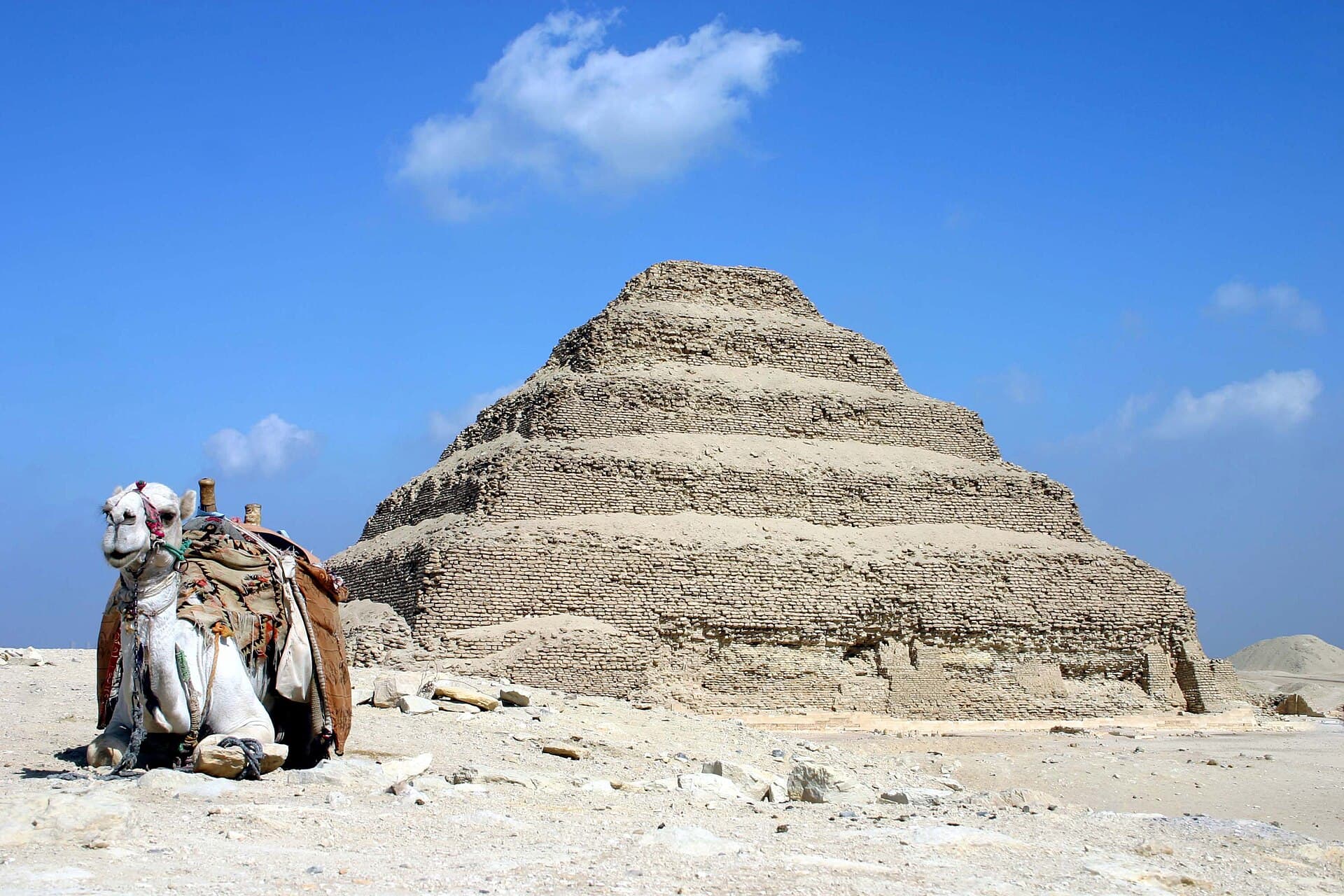
The Step Pyramid of King Djoser is the first pyramid ever built. The ministry calls it the oldest known Egyptian stone building. It is made of six stacked layers, which gives it the stepped shape.
Its architect was Imhotep. Saqqara is about 30 km south of central Cairo. It is quieter than Giza and full of painted tombs.
4. The Grand Egyptian Museum: Tutankhamun's treasures together
The GEM stands on the desert edge at Giza, about two kilometres from the pyramids. It shows the complete find from Tutankhamun's tomb, about 5,000 objects, together for the first time.
A colossal granite statue of Ramesses II, about 11 metres tall, greets you in the atrium. The Khufu boat, buried beside the Great Pyramid, is here too. Give it at least half a day.
5. The Cairo Citadel: Saladin's fortress over the city
Saladin ordered the Citadel built on the Muqattam Hills in 1176. Egypt's rulers lived here for centuries, until Khedive Ismail moved to Abdeen Palace.
The Mosque of Muhammad Ali, with its domes and tall twin minarets, dominates the skyline. The terraces give one of the best views over Cairo. Several museums sit inside the walls.
6. Khan el-Khalili: the medieval market of Islamic Cairo
Khan el-Khalili is the great trading quarter of Islamic Cairo. It takes its name from Emir Jaharkas al-Khalili, who built a merchants' inn here in the 1380s.
Today it is a maze of lanes selling lamps, spices, brass and textiles, with old coffee houses in between. Go in the evening, when it is cooler and busy with Egyptian families.
7. Karnak Temple: the great temple of Amun
Karnak, on the east bank at Luxor, was one of the most important religious sites in ancient Egypt. Nearly every New Kingdom king added to it.
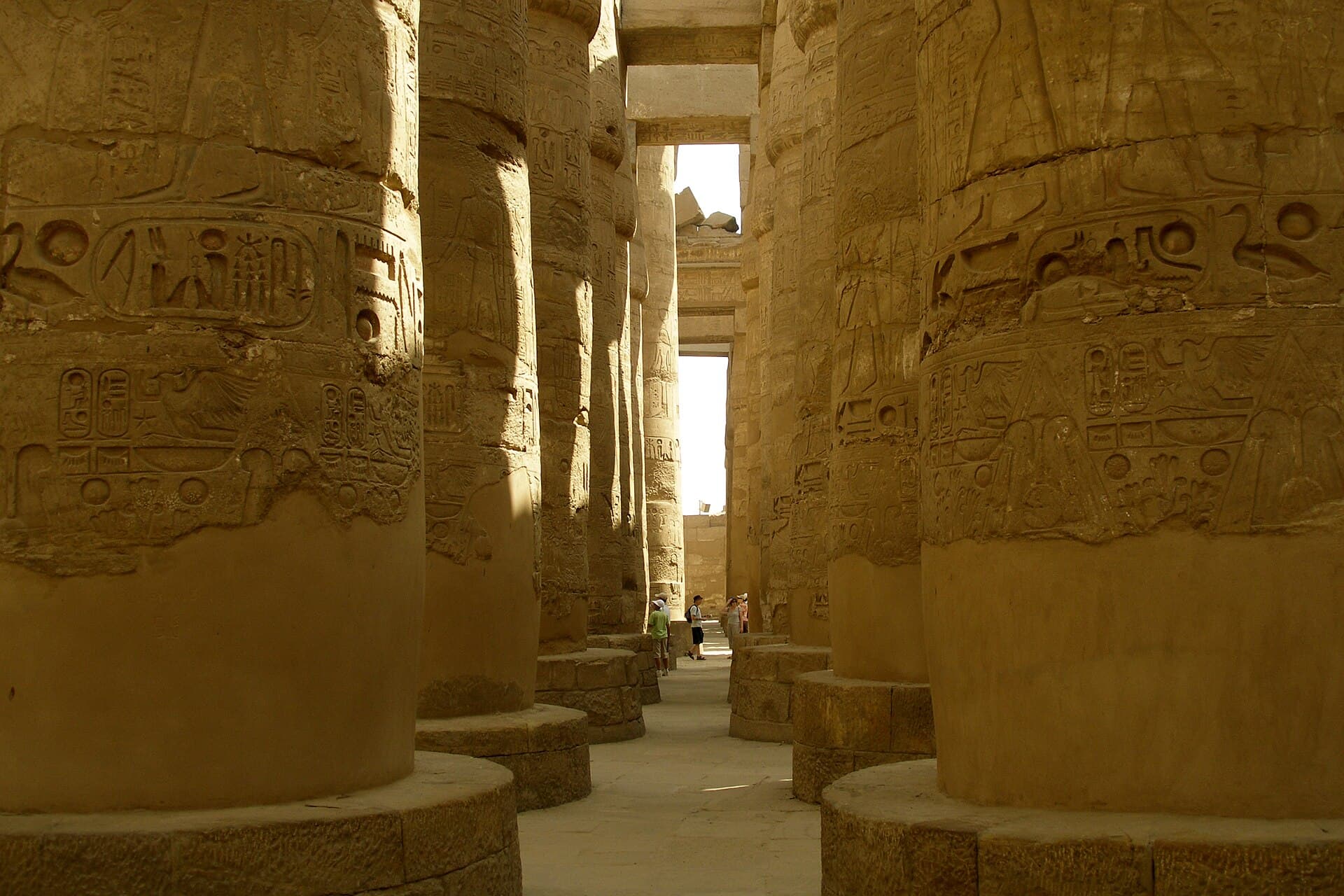
Its Great Hypostyle Hall holds 134 columns, the central twelve standing 21 metres tall. Hatshepsut's obelisk nearby is almost 30 metres high. Our Karnak guide shows you how to read the site.
8. The Valley of the Kings: the royal tombs of Thebes
The Valley of the Kings, on Luxor's west bank, holds more than sixty tombs. Most belong to New Kingdom pharaohs. Their walls are covered in painted texts about the sun's journey through the night.
Here Howard Carter found Tutankhamun's tomb, KV62, in 1922. It is the only royal tomb in the valley found almost intact. Our Top 10 tombs list helps you choose which ones to see.
9. Abu Simbel: Ramesses II's temples, moved to save them
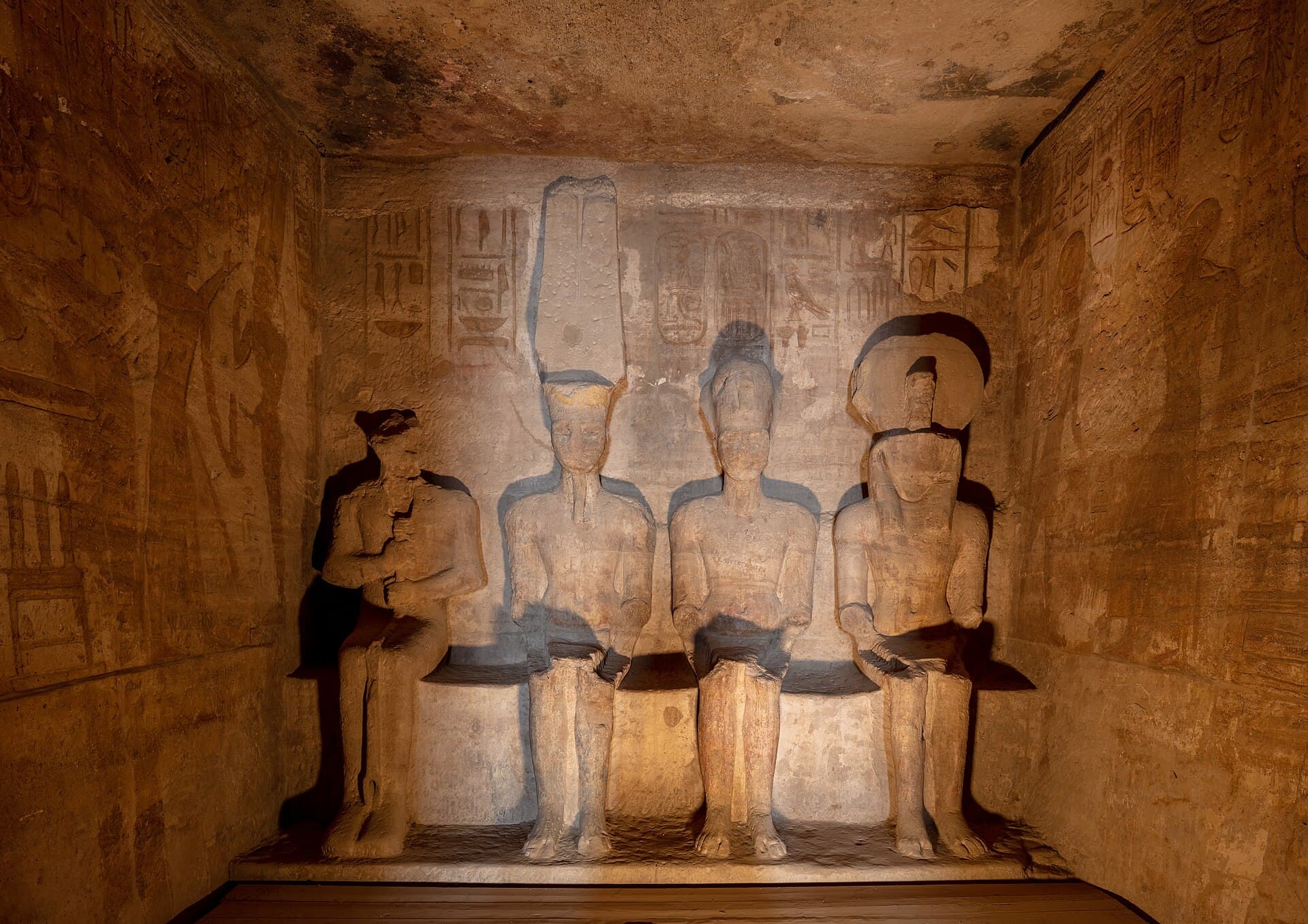
Ramesses II had the Great Temple cut into the rock around 1264 BC, near Egypt's southern border. Four seated statues of the king, each colossal, guard the front. A smaller temple next door honours his queen, Nefertari.
Both temples were moved in 1968, ahead of the rising water of Lake Nasser, in an effort led by UNESCO. On 22 February and 22 October the sun shines deep into the temple. It lights up the statues in the inner sanctuary.
10. Mount Sinai and St Catherine's Monastery: the sunrise climb
Mount Sinai rises in the mountains of South Sinai, with St Catherine's Monastery at its foot. UNESCO listed the Saint Catherine Area as World Heritage in 2002.
Most visitors climb at night to reach the summit for sunrise. The walk takes two to three hours on the camel path, then a long flight of rough stone steps. It is far from the Nile sites, so plan it from Sharm el-Sheikh or Dahab.
Common questions
What is the most famous landmark in Egypt?+
The Pyramids of Giza, and above all the Great Pyramid of Khufu. It is the last of the Seven Wonders of the Ancient World still standing. The Sphinx sits just below it.
Which Egyptian landmarks are UNESCO World Heritage Sites?+
Nine of the ten on this list sit inside World Heritage Sites. The Giza pyramids and Saqqara belong to Memphis and its Necropolis. Karnak and the Valley of the Kings are in Ancient Thebes, Abu Simbel is with the Nubian Monuments, and the Citadel and Khan el-Khalili are in Historic Cairo. Those four were listed in 1979, and the Saint Catherine Area followed in 2002.
Can you see Egypt's main landmarks in one week?+
You can see most of them. Spend two or three days in Cairo for Giza, Saqqara, the GEM, the Citadel and Khan el-Khalili. Then fly south for Luxor and Abu Simbel. Mount Sinai needs its own trip. Our 7 days in Egypt page shows a full plan.
Is the Grand Egyptian Museum near the pyramids?+
Yes, about two kilometres away, on the desert edge at Giza. Many trips do both on the same day, or on two mornings back to back.
Which landmarks are in Luxor?+
Karnak and Luxor Temple on the east bank, and the Valley of the Kings and Hatshepsut's temple on the west bank. Our Top 10 temples list covers Luxor's temples in more detail.
When is the best time to visit Egypt's landmarks?+
October to April, when the days are cooler. Summer at Luxor and Abu Simbel is very hot, so start at opening time. Our best time to visit Egypt page has the month-by-month detail.
Do I need a guide for the landmarks?+
You do not need one, but a good Egyptologist guide helps a lot at Karnak, Saqqara and the Valley of the Kings. On the tours we sell, an English-speaking guide comes with each day of sightseeing.
Official sources
Entry rules, opening hours, security advice and exchange rates all move. Check them at the source, not here.
Written and checked by the Nile Trip Guide editorial team · Last reviewed . Entry rules, prices and opening hours change — check anything critical against the official sources linked on this page.
Plan this trip
Tell us your dates and we will price it
A real itinerary with real prices, usually within 24 hours. Nothing is booked and nothing is charged until you say yes.
Sixteen days and very little left out: Cairo, a flight to Aswan, three nights sailing down to Luxor, two more days of Luxor on land, three nights on the Red Sea, then back to Cairo for Saqqara and Dahshur.
The standard Cairo-and-cruise route with two extra nights in a Luxor hotel before boarding, which is what buys you the Valley of the Queens, Medinet Habu, the Ramesseum, and a day out to Dendera and Abydos.
Five nights in Cairo either side of a four-night sail from Luxor to Aswan. The Cairo days are private, just your party and a guide; the sightseeing off the boat is shared with a small group.