Top 10 temples in Egypt: the best temples, from Karnak to Abu Simbel
The ten best temples in Egypt are Karnak, Luxor Temple, Abu Simbel, Philae, Edfu, Dendera, Abydos, Hatshepsut's temple, Medinet Habu and Kom Ombo. Four are in Luxor. Dendera and Abydos are day trips to the north. Edfu, Kom Ombo and Philae line the Nile south to Aswan. Abu Simbel is near the southern border. A Nile cruise reaches most of them.
How we chose these ten
We picked temples that are open to visitors and worth the trip on their own. Each one has something no other temple has: a size, a setting, a ceiling or a story.
The facts come from Egypt's Ministry of Tourism and Antiquities and from our own page on each temple. We left out ticket prices and opening hours, because they change. Our temple pages carry them, with the date we checked.
The order is rough, starting with the famous ones. Two near misses are the Ramesseum on Luxor's west bank and the temple at Esna. Both are good, and both are smaller visits.
1. Karnak: the biggest temple complex of all
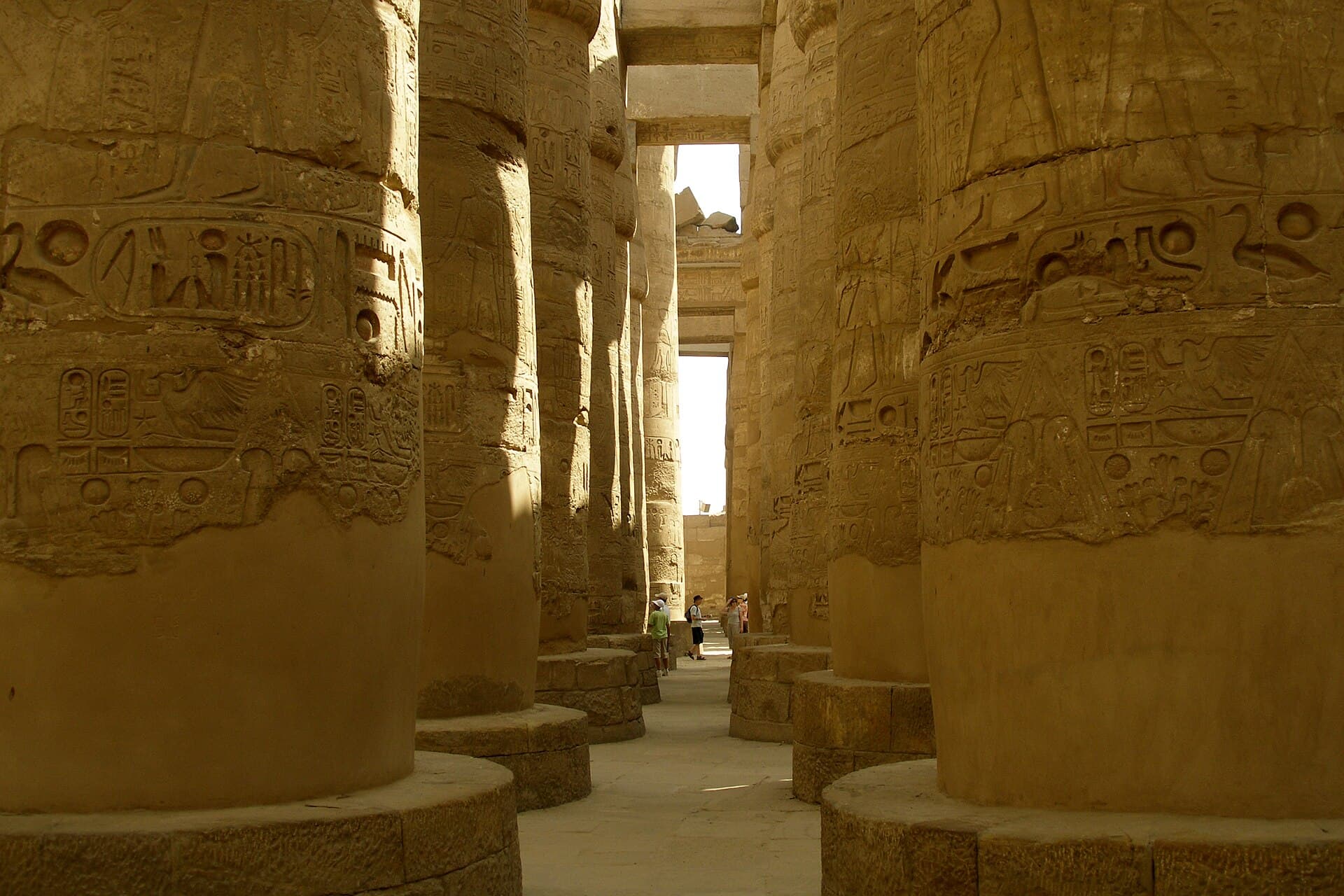
Karnak, on the east bank at Luxor, was the great temple of the god Amun. Kings built here for about two thousand years, and nearly every New Kingdom king added something.
Its Great Hypostyle Hall is a forest of 134 columns. The central twelve stand 21 metres tall. Hatshepsut's obelisk nearby rises almost 30 metres. Give it at least two hours.
2. Luxor Temple: best after dark
Luxor Temple stands in the middle of the town, about three kilometres south of Karnak. A road lined with sphinxes once joined the two. Amenhotep III built its core, and Ramesses II added the great front gate.
One of Ramesses II's two obelisks still stands at the entrance. The other has been in Paris since 1836. The temple is open in the evening and lit up, so it is easy to fit in after dinner.
3. Abu Simbel: four giant statues of Ramesses II
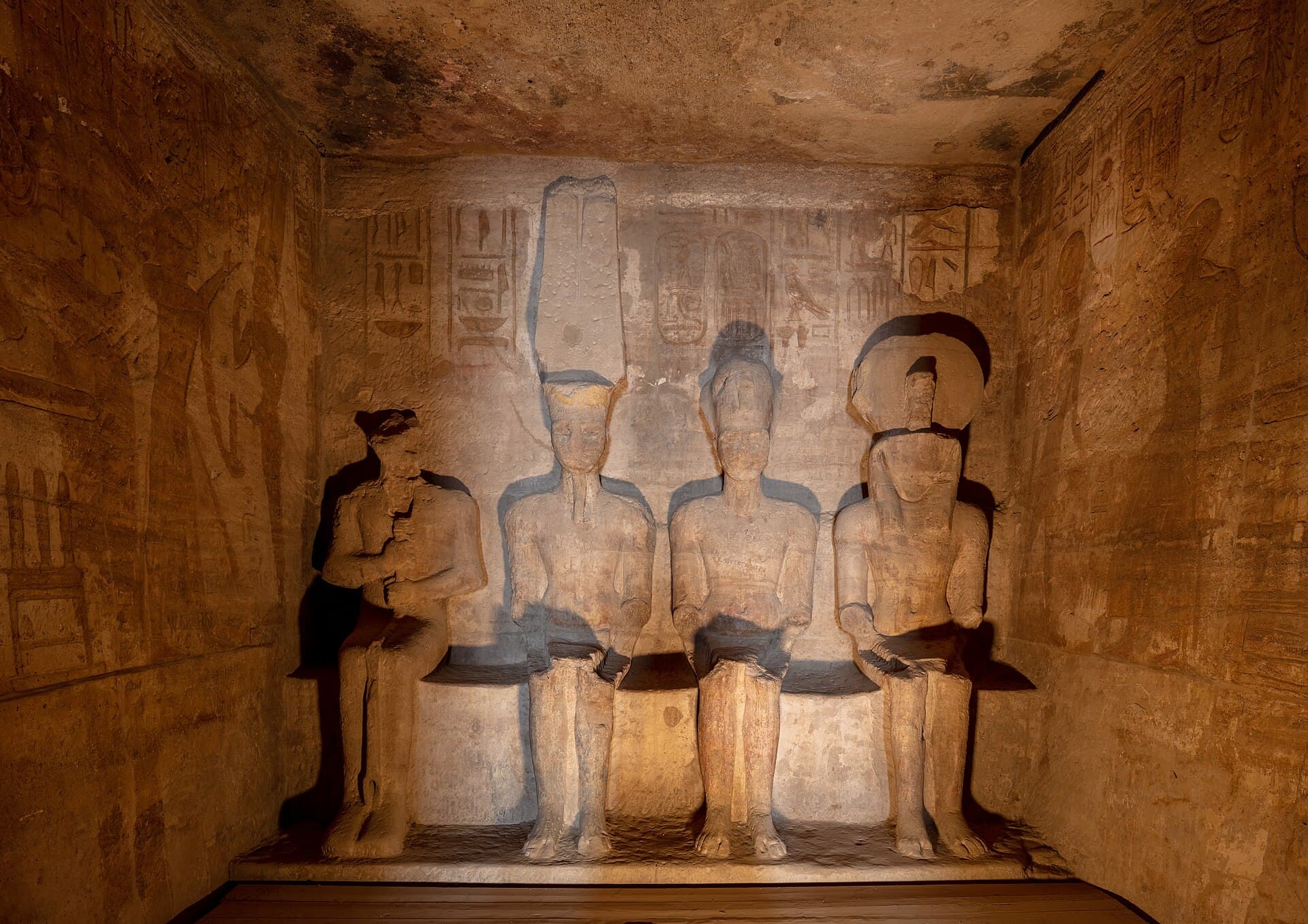
Ramesses II had this temple cut into a cliff around 1264 BC, close to Egypt's southern border. Four seated statues of the king guard its front. One fell in an ancient earthquake, and its pieces still lie on the ground.
Next door, a smaller temple honours Queen Nefertari, and her statues match the king's in size. Both temples were moved in 1968 to escape the waters of Lake Nasser. On 22 February and 22 October the sun lights the inner sanctuary.
4. Philae: the island temple of Isis
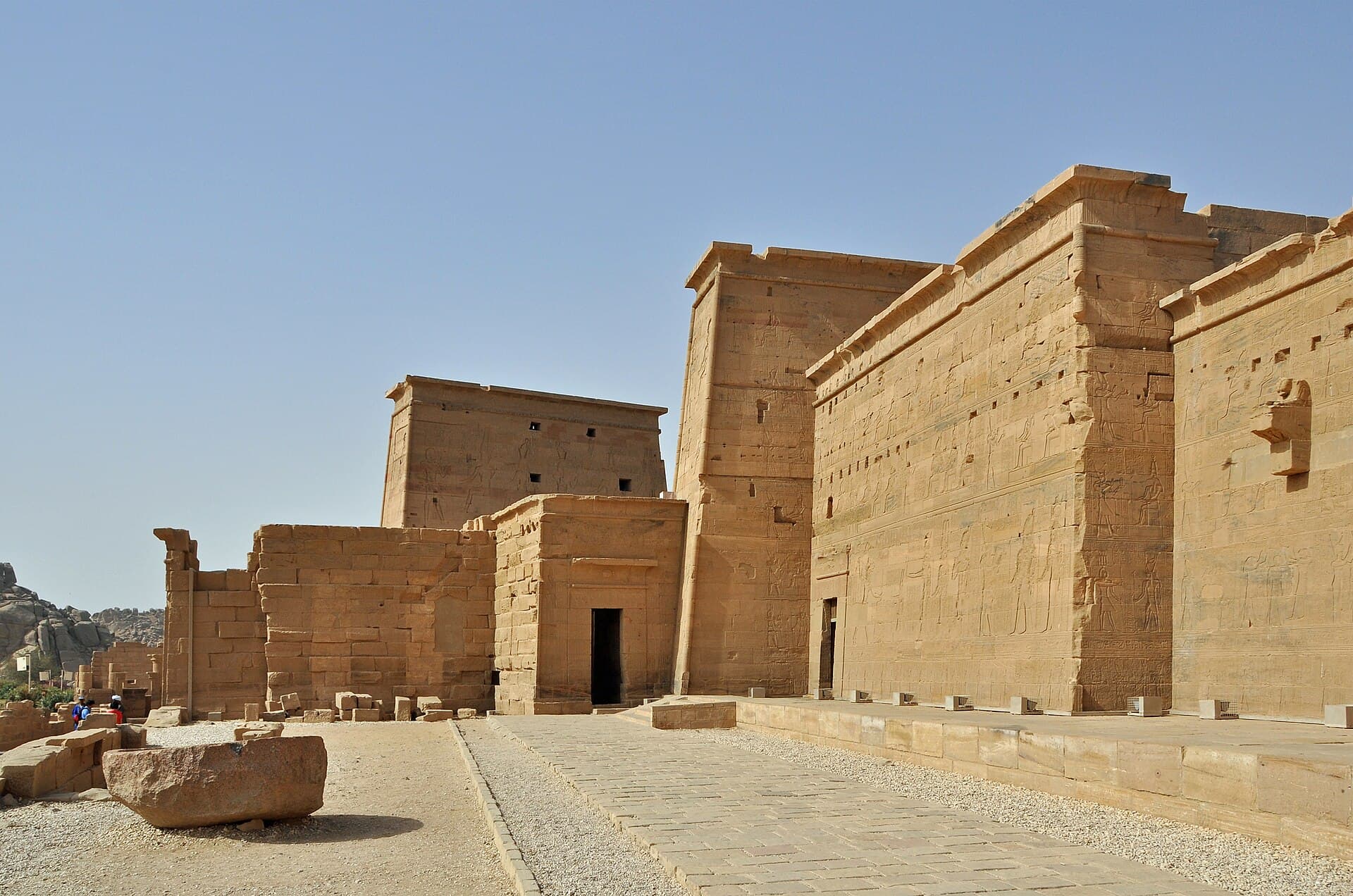
Philae, near Aswan, is the temple of the goddess Isis. Ptolemy II began it, and it stayed in use until the 6th century AD. The last dated hieroglyphic inscription in Egypt was carved here, in AD 394.
The whole complex was taken apart and rebuilt on Agilkia island to save it from the dams. You reach it by a short boat ride. The Kiosk of Trajan, with its open columns, stands by the water.
5. Edfu: the most complete temple in Egypt
Edfu is the temple of the falcon god Horus. Work began in 237 BC and ended in 57 BC, 180 years later. Two granite falcons stand at the gate.
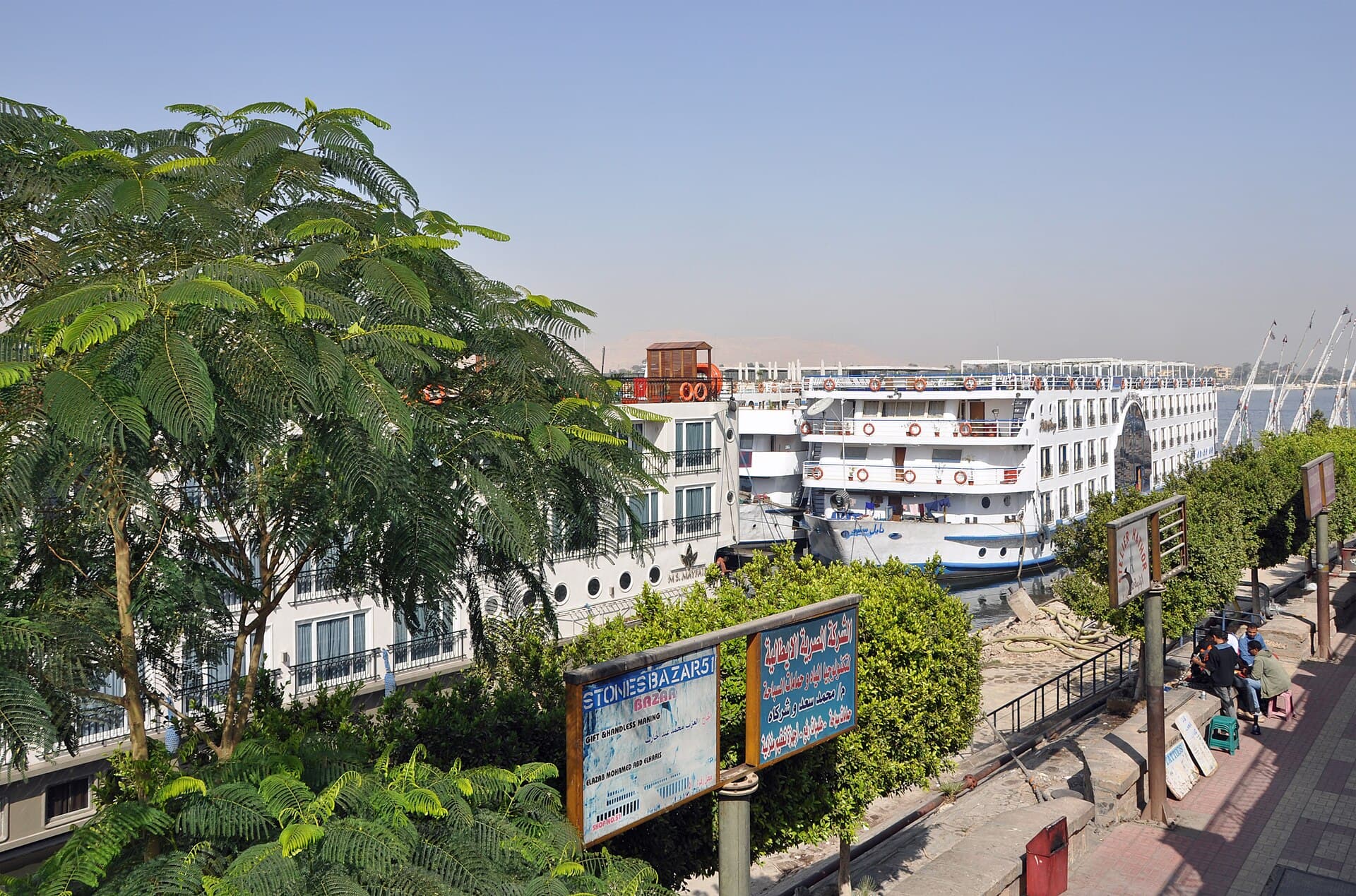
It lay buried under debris for centuries, which is why it survived so well. The roof is still on, and you walk from hall to hall into the dark sanctuary. Most visitors come on a Nile cruise, which moors in the town.
6. Dendera: Hathor's temple and its painted ceilings
Dendera, north of Luxor, is the temple of Hathor, goddess of music, joy and motherhood. Its front hall rests on columns topped with Hathor's face.
The roof is still on, and the ceilings keep their colour. They carry astronomical scenes, with the signs of the zodiac. It is a long day trip from Luxor, often paired with Abydos.
7. Abydos: the finest carving in Egypt
Abydos lies about three hours' drive north of Luxor. The Temple of Seti I here has some of the finest relief carving in the country. The detail is sharp and delicate.
Look for the King List, a carved roll of earlier pharaohs. Behind the temple is the Osireion, a rough stone building linked to the god Osiris. Abydos was his holy city.
8. Hatshepsut's temple: terraces against the cliffs
Hatshepsut, the queen who ruled as pharaoh, built this temple at Deir el-Bahari on Luxor's west bank. Her steward Senenmut designed its three great terraces.
On the middle terrace, carvings show her trade expedition to the land of Punt, with its houses, animals and riches. Go early. The cliffs trap the heat, and by late morning it is one of the hottest spots on the west bank.
9. Medinet Habu: colour, battles and few crowds
Medinet Habu is the memorial temple of Ramesses III, on Luxor's west bank. A great mud-brick wall surrounds it, and you enter through a tall fortified gate.
The walls show his wars against the Libyans and the Sea Peoples. Paint still clings to many walls and ceilings. It sees far fewer groups than Hatshepsut's temple, so it is a calm place to end a west bank morning.
10. Kom Ombo: a temple for two gods
Kom Ombo, on the Nile between Edfu and Aswan, was built for two gods at once. The crocodile god Sobek has one half, and Horus the Elder has the other. So it has two entrances, two halls and two sanctuaries.
Look for a carving thought to show surgical instruments, from the 2nd century AD. Cruise boats moor right below the temple, and a visit takes under an hour.
Common questions
What is the most impressive temple in Egypt?+
Karnak for sheer size, and Abu Simbel for its four giant statues. For art, many travellers rate Abydos and Dendera highest. Our list covers all four.
Which temples can I see on a Nile cruise?+
A standard cruise between Luxor and Aswan stops at Karnak, Luxor Temple, Edfu and Kom Ombo, and usually Philae. Abu Simbel is an extra trip from Aswan. Dendera and Abydos are day trips north of Luxor.
How many temples are there in Luxor?+
Many. The big ones are Karnak and Luxor Temple on the east bank, and Hatshepsut's temple, Medinet Habu and the Ramesseum on the west bank. Dendera and Abydos are further north, within a day trip.
Is Abu Simbel worth the trip?+
Yes, for most people. It is far south of Aswan, so it takes a long day by road or a short flight. Our Abu Simbel guide covers both ways to get there.
What is the best-preserved temple in Egypt?+
Edfu. It lay buried under debris for centuries, so its roof, walls and halls survive almost complete. Dendera is close behind, with its roof and ceiling colour intact.
Do I need tickets for each temple?+
Yes, each site has its own ticket, sold at the gate or on the ministry's site, egymonuments.com. In Luxor, a Luxor Pass can cover many temples. Our Luxor Pass guide works out when it pays.
When is the best time to visit Egypt's temples?+
October to April, when the days are cooler. In summer, start at opening time and rest at midday. Hatshepsut's temple and Abu Simbel get very hot.
Official sources
Entry rules, opening hours, security advice and exchange rates all move. Check them at the source, not here.
Written and checked by the Nile Trip Guide editorial team · Last reviewed . Entry rules, prices and opening hours change — check anything critical against the official sources linked on this page.
Plan this trip
Tell us your dates and we will price it
A real itinerary with real prices, usually within 24 hours. Nothing is booked and nothing is charged until you say yes.
Sixteen days and very little left out: Cairo, a flight to Aswan, three nights sailing down to Luxor, two more days of Luxor on land, three nights on the Red Sea, then back to Cairo for Saqqara and Dahshur.
The standard Cairo-and-cruise route with two extra nights in a Luxor hotel before boarding, which is what buys you the Valley of the Queens, Medinet Habu, the Ramesseum, and a day out to Dendera and Abydos.
Four nights sailing south from Luxor to Aswan: Karnak and Luxor temples on the first afternoon, the Valley of the Kings, Edfu, Kom Ombo and Philae. Full board throughout, with sightseeing in a shared group of about fifteen.